In 2014, I have been investigating
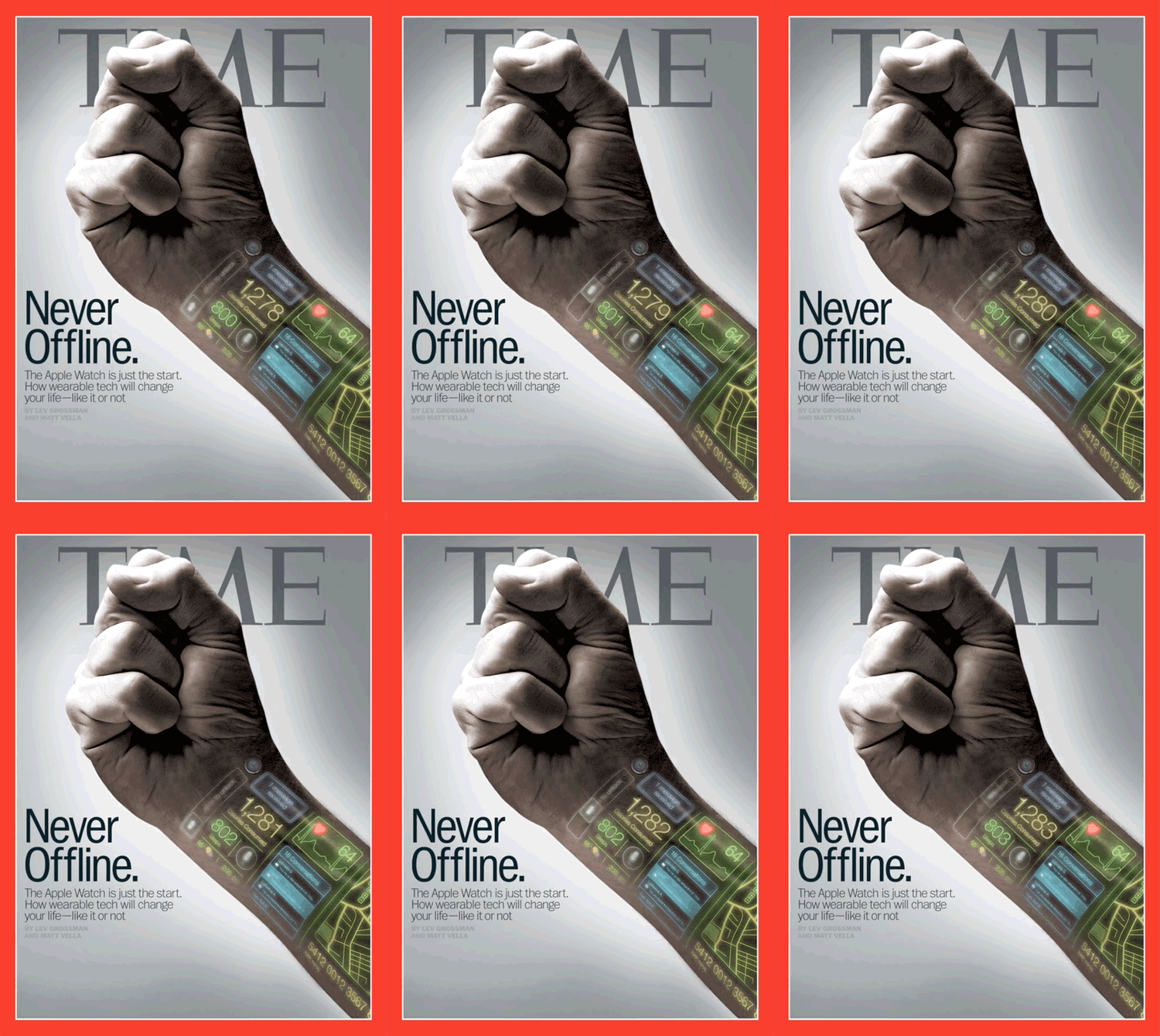
the number of key ideas in my design work and one of them is the idea of being constantly
online. I have investigated this in my Photographics paper (CCDN244) and specifically
I have referred to the idea of eInk and the possibilities for its application
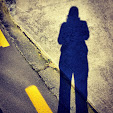
in the form of tattoos. This led me to develop a series of self portraits that
can be seen on my design blog here.
As further development of that idea
I am interested in investigating the possibility of inserting myself into my
code designs. I have based my research on this concept.
Precedent one: Bridget Reilly
The connection between Bridget
Reilly and assignment one is obvious. She was the first artist I was reminded of
when I commenced this paper and then she appeared in Doug Easterly’s lecture as
a precedent. The image that can be seen at the above link is an example of the numerous
portraits that can be found of Bridget Reilly surrounded by her art. It is a
literal expression of the founding concept for my project. I am also interested
in her use of triangulation.
 |
| Source |
Precedent two: Peter Trevelyan
Last
week I visited the Dowse Gallery in Lower Hutt and saw an exhibition that
featured this New Zealand artist. The work
featured in this exhibition immediately reminded me of the geometry inherent in
the practice of creative coding. It is a pyramid constructed of hundreds of
clear plastic set squares. The way in which the light that passes through the
sculpture then plays on the surrounding walls motivates me to explore how this
can be expressed in code. The triangulation of this form also inspires me to
seek a way to recreate some aspect of the form in one or more of my designs.
The image to left was taken by me as permitted at the Dowse.
 |
The Technical Drawing, Peter
Trevelyan, 2014, set squares, super glue, Dowse Gallery, Lower Hutt
|
Precedent three: MIT Media Lab Identity by TheGreeneyl
http://www.thegreeneyl.com/mit-media-lab-identity-1
This is not really by an artist however I saw this in one of
the tutorials and was moved to research TheGreeneyl’s logo design project for
MIT. I like the way the three simple shapes represent a single person’s
contribution then come together to form a new shape. I am excited by the fact that this was programmed on Processing. There is a succinct video
that explains the project on Vimeo here: https://vimeo.com/20488585
Precedent four: The art of Scott Blake
Scott Blake is an Omaha, Nebraska
artist who makes art with barcodes and QR Codes. There is a multitude of examples of his
work that can be seen at his website via the above link and they are really appealing
however the reason I am most interested in his ideas is because they further
engage with my concept of inserting oneself into the code. The essence of this
work is that there is quite literally an underlying message in all his images.
For example, his portrait of the American broadcast journalist, Amy Goodman, is
made with 2,304 QR codes that link to nine years of Democracy Now videos. (Goodman
hosts Democracy Now’s daily news broadcast). The portrait can be seen here:
https://www.flickr.com/photos/scott_blake/5185387455/in/photostream/NB - there are some other really interesting examples of QR code art here
Precedent
five: The art of Kazimir Malevich
I have
been studying Twentieth Century art this year in my BA which meant revisiting Malevich’s
art. He was the founder of the Russian Suprematist movement which grew out of
the Cubist and Futurist movements in the early decades of the 1900’s. Works such
as Black Square tested the
boundaries of people’s perception of art in their simplicity. I enjoy art that is
(sometimes deceptively) simple on first viewing and to me Malevich was a great practitioner of this form of artistic expression. Malevich was also interested in aerial
photography which led him to abstractions based on aerial landscape which
relates to my other current interests: drone photography and data representation.
I like the idea of coding an image that recreates a crowded beach as seen from
a drone or documents the movement of someone or something.
An early example of
this can be seen below in the photography of Étienne-Jules Marey.
 |
| Source |
As a addendum to the inclusion of this final precedent, I found an interesting blog post here which talks
about the coding world's obsession with simplicity. It specifically refers to
the good/bad dichotomy (where good = simple and bad = complex) that exists in
coding. I must admit to being susceptible to this mindset already. With
relatively little experience in this discipline I have already started forming
the opinion that minimal coding must be a sign of greater skill. The above post
has challenged me to think alternatively and so I will try to remain
open-minded about simplicity in coding for now.